All in the Race: British Horseracing Authority launches new cross-industry Equality, Diversity and Inclusion Strategy and publishes ethnicity research
The British Horseracing Authority (BHA) has today announced the launch of All in the Race, a new Equality, Diversity and Inclusion Strategy designed to ensure British racing is an inclusive, safe and welcoming sport for everyone.
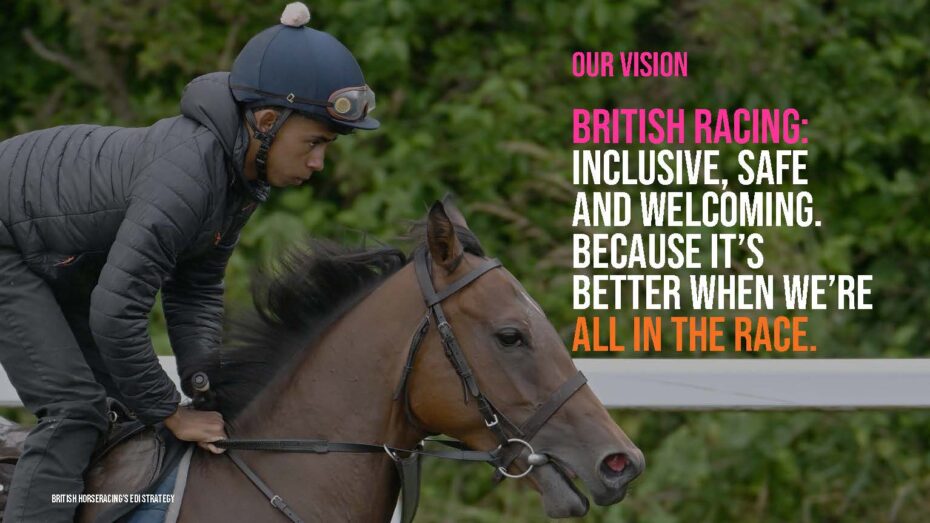
Alongside the strategy, the BHA has also published a summary of new research into the experiences of ethnically and culturally diverse people working within the sport.
Together, these publications set out a clear, evidence-based framework for action across the next three years. They aim to strengthen leadership, improve fairness and safety, widen opportunity, and ensure racing remains relevant and competitive in modern Britain.
The strategy is centrally led by the BHA but collectively owned by the sport. It has been developed in collaboration with the sport’s core stakeholders and participants, as well as the Diversity in Racing Advisory Group. It provides direction, standards and accountability, while recognising that meaningful progress depends on collaboration across leaders, racecourses, jockeys, owners, breeders, trainers, charities and the wider workforce.
The strategy outlines a vision for a sport where everyone feels respected, valued and able to fulfil their potential. It emphasises that making sure that all people feel welcome and included is essential to racing’s long-term sustainability. It is based on evidence and the experiences of racing’s workforce, many of whom have positive experiences, but not all.
Key drivers include:
- Workforce sustainability – attracting and retaining the people racing needs to thrive.
- Relevance to modern Britain – ensuring the sport reflects and appeals to a broader range of communities.
- Reputational resilience – meeting the expectations of fans, media, investors and policymakers.
- Commercial advantage – stronger performance, innovation and audience growth through greater diversity.
The strategy builds on significant progress already made across the sport, including new inclusive career pathways, safeguarding and anti-sexual misconduct training, and the work of racing charities and community groups. However, it also acknowledges that progress has been uneven and that some people have not always felt welcome or supported.
The development of the strategy, and some of the recommendations within it, have been drawn from the sport’s workforce strategy, published by the Horseracing Industry People Board in February 2025.
The strategy sets out clear, measurable actions that will make a tangible difference to day-to-day experiences across the sport for people across the full spectrum of protected characteristics. These actions include:
- Strengthening leadership and accountability
- Building more diverse viewpoints into decision-making.
- Sharing and celebrating best practice.
- Refreshing and auditing the D&I Industry Commitment.
- Building equitable practices
- Supporting the future development of an Employer Quality Standard to promote best practice.
- Improving and simplifying reporting mechanisms for discrimination, including an improved and more responsive system for people to anonymously share concerns (still branded RaceWISE) launching in the coming weeks
- Improving race day facilities and accessibility for jockeys
- Improving education and awareness
- Expanding inclusion training for high-impact roles.
- Launching a visual awareness campaign promoting positive behaviours and challenging discrimination.
- Introducing continuous learning for senior leaders and Boards.
- Better supporting and celebrating underrepresented groups
- Targeted actions to support ethnically and culturally diverse colleagues, including language support.
- Removing barriers for female and ethnically diverse jockeys through the Rider Development Pathway and Racing Home.
- Launching a Leadership Development Programme for underrepresented groups.
- Engaging new audiences
- Embedding diversity objectives into consumer engagement and social impact initiatives.
- Building partnerships to diversify early careers programmes.
- Providing best practice guidance on inclusive marketing.
These actions will be delivered through a phased implementation plan running to 2028, with transparent reporting and regular review.
The accompanying ethnicity research summary draws on three independent studies conducted between 2023 and 2025. While many people from ethnically and culturally diverse backgrounds report positive experiences in racing, the research also highlights negative experiences, barriers to progression (which are often hidden), inconsistent support, and a lack of trust in reporting systems. We are grateful to all research participants for their contribution.
These findings have helped contribute to the new strategy and will inform a dedicated ethnic and cultural diversity action plan to be developed with industry leaders and people with lived experience.
The strategy has been launched with support from industry stakeholders including the National Association of Racing Staff (NARS), National Trainers Federation (NTF), Professional Jockeys Association (PJA), Racecourse Association (RCA), Racehorse Owners Association (ROA) and Thoroughbred Breeders Association (TBA).
It has also been developed with collaboration from racing’s various industry charities which support various diverse groups within the industry.
Caroline Davies, Racecourse Services Director at the RCA, commented: “The RCA is firmly supportive of the sport’s D&I strategy and welcomes its publication today.
“Both racecourses and the RCA have implemented a range of practical initiatives and research programmes over a significant period of time to strive for equal opportunities across our sector, be it as a racegoer or racecourse employee. This strategy allows this positive work to be channelled in the right way, and maintains momentum for the future.”
Jayne Greenman, HR Director at Arena Racing Company, commented: “We welcome the publication of British racing’s new Equality, Diversity and Inclusion Strategy and the research that has informed it. While many people have positive experiences in racing, the findings clearly highlight areas where we can and should do better.
“As one of the sport’s largest employers, we recognise our responsibility to ensure our venues are places where everyone feels respected, supported and able to thrive. We are proud to support this strategy and committed to delivering real, practical change across the sport.”
Jim Mullen, Group Chief Executive at the Jockey Club, commented: “It’s good the BHA is leading the industry on this important journey as our experience is diverse and inclusive teams keep us more in tune with our customer base and ultimately help us make better decisions.”