David Armstrong on Return of Spectators
When it was confirmed privately to the RCA and BHA by DCMS that the 17th May date in the roadmap was going ahead as planned, one could be forgiven for not taking anything for granted.
Throughout the recovery from the pandemic, the sport has experienced undoubted highs, such as being the first major sport to return behind closed doors at Newcastle on Monday 1st June, but also sickening lows including large-scale pilot events being cancelled with less than 24 hours’ notice at Goodwood and Doncaster.
Our work in the last year has been cyclical in nature. A lockdown followed by the creation of new protocols followed by pilot events and finally return of limited spectators in December, only to be undone by rising cases and ultimately a second wave of the virus.
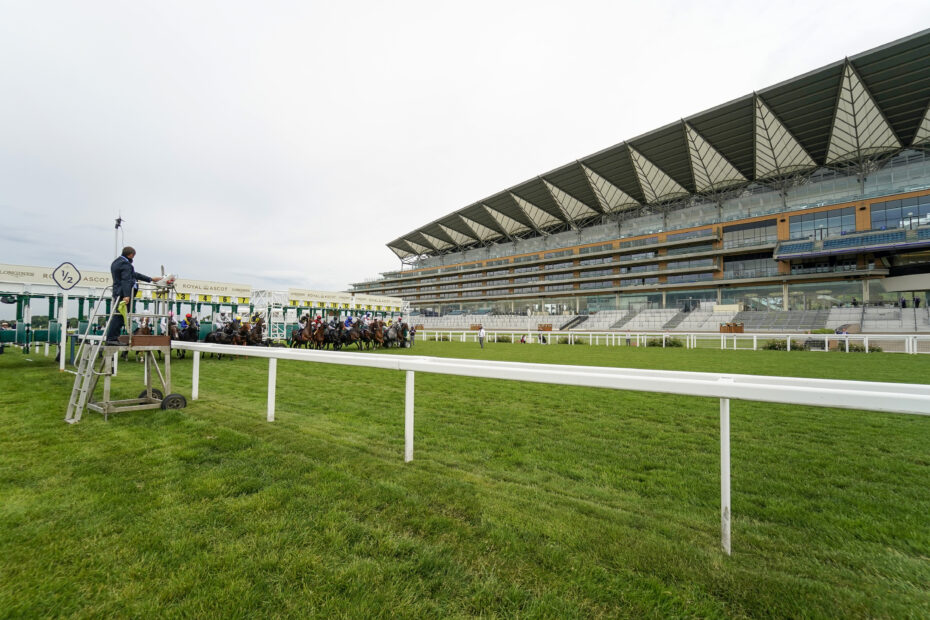
Empty stands have become the norm over the past year due to Covid-19 restrictions (image courtesy Ascot Racecourse/Alan Crowhurst)
We find ourselves again approaching the end of a cycle. I cannot emphasise enough how much work has gone into creating new protocols since April 2020 to ensure the safety of all participants and to allow the sport to continue. It is not an exaggeration to state that between racing’s administrators and racecourses, we have re-written the playbook on how to stage a horseracing meeting, a practice that has largely been unchanged for decades.
In order to facilitate behind closed doors racing, all racecourses were forced to reconfigure their sites at significant cost. Examples include transforming hospitality areas into new weighing rooms to accommodate social distancing for jockeys and erecting miles of fencing to prevent crowds gathering on racecourse perimeters. The total bill for these changes exceeded £2m, most of which was funded by the Horserace Betting Levy Board (HBLB) to whom we are extremely thankful.
Collaboration across the sport has come under intense scrutiny during the past year. Whilst it is true that there are some challenges we must work together to resolve, it is also true that as a unified team we have achieved a great deal in the face of adversity. The tripartite structure of BHA, RCA and Horsemen’s Group has brought a diversity of thought to the significant trials we have faced and we would not be where we are today without the collective willingness to succeed and compromise where it has been needed.
There has been some criticism that the sport has not pushed ahead swiftly enough with the return of spectators and that we have identified as an elite sport. I can understand the former view given the optics from recent pilot events in football and the leisure sector, but it is important to clarify some facts. Through our effective lobbying and forensic protocol, our sport was the first to return in Britain. Horseracing has been awarded more pilot events than any other sport. Equally, being an elite sport has meant the painful loss of certain elements of the raceday experience, such as hospitality, but without this distinction we would have been forced to shut down multiple times. I firmly believe in the long run this has been to our benefit.
The racecourses welcoming spectators today have undergone major changes since the move to Step 3 was confirmed. You’ll note that our Green Zone, the bio-secure bubble to protect participants, has been streamlined to maintain protection and free up further space. Racegoers and owners will be free to enjoy the raceday at their leisure in outdoor areas whilst indoors there will be capacity calculations to maintain safety. With suitable mitigation including social distancing and face coverings, owners will also be allowed back into the Parade Ring—specific numbers permitted will vary by racecourse but this is a big step in the right direction.
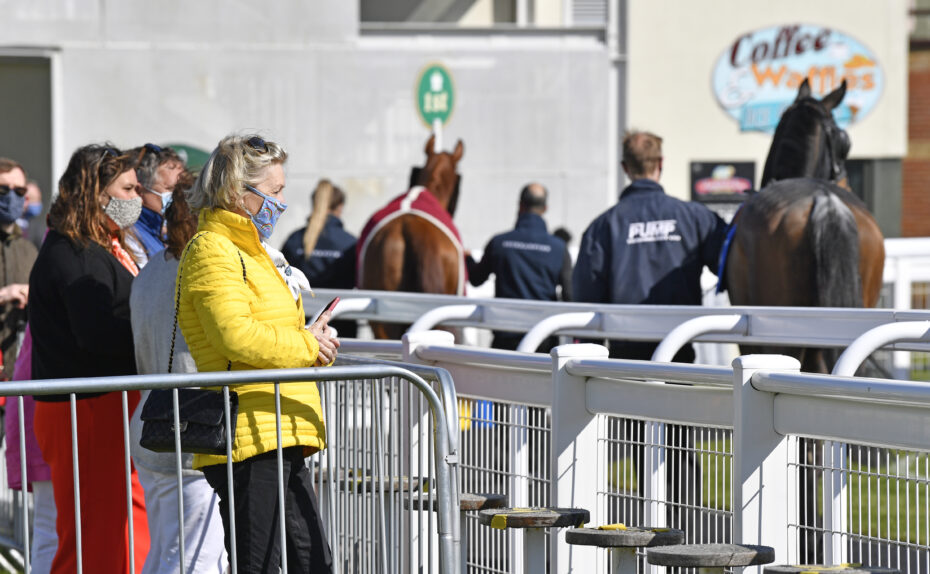
Owners will be permitted back into the Parade Ring (local restrictions may apply) from Monday 17 May in England
This is the only start of our recovery. Racecourses have incurred around £400m of lost revenue since the pandemic began which has affected all areas of their businesses. Understandably, this will take time to rectify but racecourses will strive to return prize money to pre-pandemic levels and beyond as a priority.
The next milestone to look towards is the 21st June and we are hopeful that all metrics point towards Government further lifting the lockdown restrictions. For racing, this would mean the return of substantial, or even full crowds, and with fewer or no mitigations. We remain in discussions to host at least one pilot event in June which could host up to 10,000 spectators safely. The sport continues to lobby Government hard for the best outcome and we should expect initial briefings on pilot events in the very near future and by mid-June regarding the next stage of the roadmap.
I’d like to thank jockeys, trainers and especially the owners at this juncture for their patience and understanding to date. The support of these groups has never been taken for granted, particularly over the past year with their unwavering support for British horseracing.
Will racing today be just as it was in May 2019? Almost certainly not—but it will remain a great day out with friends and family and an exciting event to witness live thoroughbred racehorses. We are excited to see, and hear, racegoers back on racecourses.
2021 still holds a number of exciting initiatives in store: the three remaining Classics, the inaugural running of the Racing League and flat racing’s Hall of Fame to name but a few. We must continue to work collaboratively to achieve key breakthroughs away from the track, notably the structural reform of the Levy, but also to put into practice the new streamlined and efficient industry we have become over the past year. The pandemic has forced upon us a change to the status quo and we must now make the most of this.
My very best wishes to the teams at Carlisle, Leicester, Redcar and Windsor who will no doubt offer a warm welcome later today to racegoers, owners and participants alike.
This article was featured in the Racing Post on 17th May 2021.