Welcome to Horseracing, David Armstrong
DAVID ARMSTRONG had no shortage of offers of fulltime employment when he stepped down as chief executive of Wasps rugby club in June 2017, before the challenge of taking up a similar role with the Racecourse Association won the day.

David Armstrong is the new CEO of the Racecourse Association
So keen was he to roll up his sleeves and get cracking that although his start-date was announced as 11 March, he was behind his desk at Ascot in the second week of February, just in time to become embroiled in the equine influenza saga.
“There are very few big jobs in rugby and they come up very infrequently, so I always felt it was less likely I would find another role in that sport,” says Armstrong, who spent three years spearheading Wasps’ move from London to the newly-acquired Ricoh Arena in Coventry and turning it into a huge conference, leisure and entertainments business operating 364 days a year.
The prospect of a move from rugby to racing was a different matter altogether.
“Many things appealed to me about the RCA job,” he says. “Firstly, looking at the sport as a whole and the opportunities it faces – the second highest fan attendance after football but well ahead of cricket and rugby, with a younger average age and a great demographic of male and female attendees – makes it a fantastic one to work with.

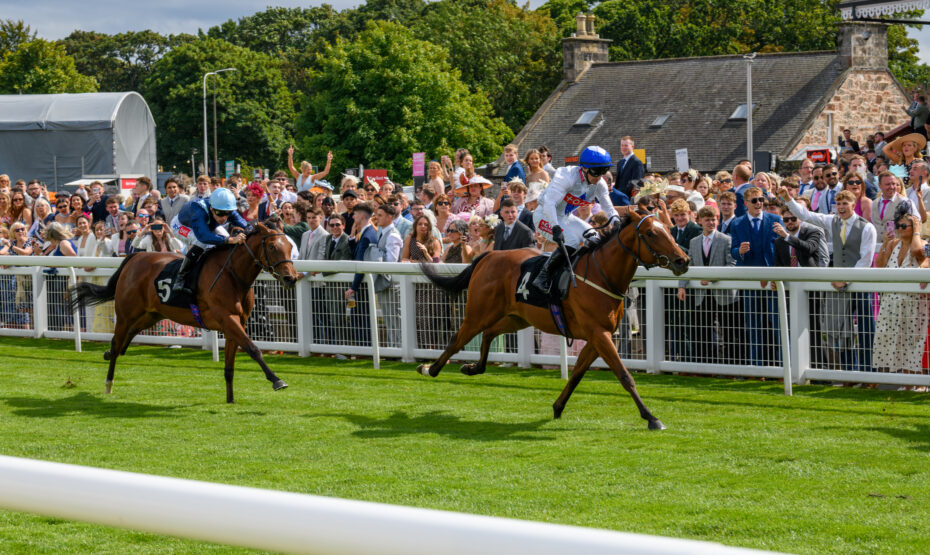
A great day out: one of the main attractions in joining the RCA was to help make a day at the races an even better experience. Photo credit Jim Holden
“As for the commercial opportunities and the ability to influence and help support our racecourses, there are a lot of parallels with what I’ve done before. For example, at Wasps we really focused on the matchday experience and the family environment, things that racing has begun to embrace but there are always further opportunities.
“I also think there’s somewhat of a perception that horseracing is driven by the betting angle, which puts off some people. We need to get back a little to our roots in emphasising what a fantastic sport it is, which betting goes alongside, but concentrating on the athleticism of the horses and the jockeys.
“I’ve always enjoyed horseracing, either as part of a syndicate of owners 20 years ago or as a racegoer maybe three or four times a year, so I was aware of the industry and the sport without being that close to it.
“Wanting to take on the RCA job was a combination of all those things, and when it was offered, the chance to hold such an influential role in the second largest sport in the country was too good to turn down.”
Armstrong, a chartered accountant whose early business career took him to a range of top international companies, including PepsiCo, the Compass Group, Diageo and Lonrho, says he sold himself to the RCA interview panel largely on the basis of his breadth of experience in sport.
“I emphasised a number of things but possibly the most interesting was the outside perspective I could bring to horseracing, whether that’s in media rights, sponsorship and commercial activities, or the whole matchday experience,” he says.
“I’ve also had to deal with lots of complicated stakeholder environments, and it doesn’t get much more complex than horseracing.
“And the third point was my financial background, whether that’s looking at new funding for the industry or for Racecourses or driving profitability from existing operations – all areas I have plenty of experience of.”
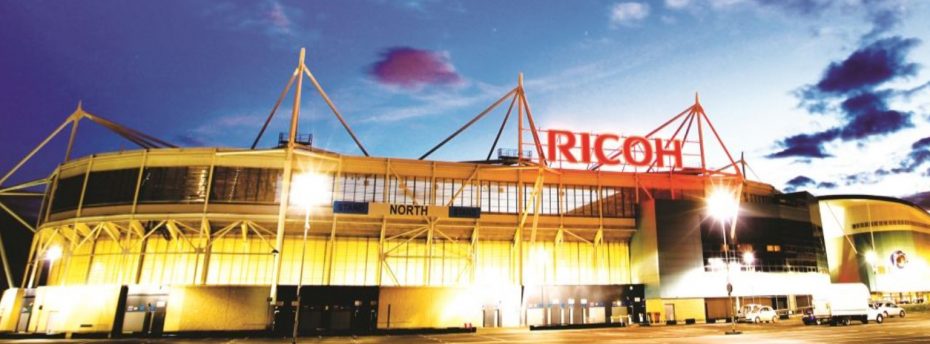
The Ricoh Arena has become one of Britain’s most successful mutli-purpose venues
Armstrong is having to adapt to the change from being a one-club man to having responsibility for 59 entities, but the prospect does not faze him.
“I find that exciting from the point of view of the variety and scale of opportunities across the various racecourses,” he says. “In rugby, the idea of bringing through a good idea at one club to share across others, is quite frustrating due to the highly competitive nature.
“The opportunity at the RCA is to be able to bring forward commercial thinking, good ideas and organisational changes that bring value to everyone at once. The scale of that value depends on individual racecourses and the situation they’re in, so one size doesn’t fit all, but their variety is one of the most interesting things about the job.
“Anyone managing a course, whether as an independent or part of a large group, is very tied up in the day-to-day operation, and perhaps doesn’t get enough time to see the wider perspective, to see what other sports are doing or to see what other racecourses are doing.
“My role will be to bring forward that range of ideas and opportunities in a way that is as important for Jockey Club or ARC courses as it is for the smallest of the independents. I will spend time looking at the various businesses and seeing where the opportunities may lie, either for an individual course or where consolidation across all 59 would help everyone, and everything in between.”
Armstrong sees several parallels between RCA members and his most recent experience running the multi-use complex at the Ricoh Arena.
“In terms of utilisation, racecourses have realised they need to branch out as far as they can,” he says. “There are fantastic pieces of real estate around the country, operating on average around 15 times a year, but potentially sitting idle for long periods of the time is a tremendous waste of a great asset.
Armstrong believes horseracing can learn a number of lessons from other sports, not least in the areas of data, sponsorship and media rights.
He reflects: “I believe there is scope to enhance racing’s understanding of who its customers are, why they have come how often they have come and what they enjoyed on-course. Data is the currency of sport and horseracing is in a position to make the most of this opportunity.

The move to the Ricoh has transformed the fortunes of Wasps RFC
“In the whole commercial area of sport customer (or fan) data is the engine room. Rugby does it pretty well but is not the best. Football at the top end is getting very good, but the best are the American sports, the NBA and NFL. Customer data is also the driver of sponsorship values which is another area where racing can look to the successes of some other sports.”
While getting to grips with the minutiae of racing’s organisation, the sport’s division of media rights has aroused Armstrong’s curiosity.
“Racing’s media is divided into two, and I’m intrigued as to what the onward opportunities are here and whether there are ways I can help both to monetise better,” he says. “Typically, the feeling within the sport would be that if you fragment your media rights, you get two and two equals three, not two and two equals five.
“A lot of work has been done by some very smart people to create the current media structure, and I’m very respectful of that, but I’m curious as to what the opportunities are.”

Young & old: David hopes to bring in a family audience to horseracing as he did at Wasps
David is also very focused on the role the RCA needs to play in the sport’s governance. He will be joining the Board of the BHA as part of its structural review. “The RCA has a crucial role to play in the decision-making processes in the sport and I look forward to bringing a fresh perspective to some of the complex issues on the table”
Armstrong’s move to the RCA has meant relinquishing some non-executive positions, including standing down as a panel member of UK Sport and Chairman of his local rugby club Effingham & Leatherhead RFC. However, he will continue to act in other areas, including as a director at Wasps and Chairman of Pentathlon GB, which he joined in December, taking the view that such involvement will enhance his role with the racecourses.